
Here’s a history (not found on Wiki)
The town of Borgetto stands on the slope of a hill, on the opposite side to the classic Conca d’Oro. A series of hills and plateaus overlook the town, crowned at the end by the high mountains of Crocefia and PIatti. Looking towards the sea, a panorama of enchanting beauty strikes the eye. Of the plain in front, limited to the north by the picturesque gulf of Castellamare up to the hills of Capo San Vito; from the mountain of Palmito up to the charming town of Montelepre, the soul of the spectator remains deeply conquered by a wave of inspired poetry. Vito; from the mountain of Palmito up to the charming town of Montelepre, the soul of the spectator remains deeply conquered by a wave of inspired poetry.
The name of Borgetto derives from the Arabic “burg” or according to others from the Greek “burgos” which means: tower-castle. In ancient times it was customary to build a tower first and around it it was very easy for houses to arise for greater safety and tranquility of the inhabitants; reason why the agglomeration antonomastically took the name of Borgetto. Since the emblem of the Municipality features a tower, I would prefer to accept the meaning Borgetto directly from the Greek etymology “burgos” and a source from 1855 calls the well-known Largo Migliore – with evident reference to the castle or tower – Largo Castellaccio.
The Burgetto castle therefore stood alone among the endless and silent woods since the second half of the 13th century. Rummaging through the ancient manuscripts I have not yet found any document on its origin. It is certain, however, that the fortress was built for its own defense by a powerful lord, perhaps during the Saracen domination or very probably by a Norman or Swabian lord. The traditional legend that until recently was circulating among the Borgetans tells that a flock of bandits had taken refuge under the protection of the feudal lord of Borgetto; that the leader of the gang had married the lord’s daughter; and that there those men, attracting women from the nearby municipalities to make them more or less legal companions, gave rise to the “Casale di lu Burgettu”.
The first document found so far that speaks of Borgetto is the parchment of 21 October 1294. In it it is said that Simone D’Escolo, owner of the fief and hamlet of Borgetto, worried by his neighbours, implores from the Infante D. Federico, Lieutenant of the Kingdom, that the letters of King James of Aragon be opened, with which it is recommended that the noble knight from Palermo Simone D’Escolo be maintained in his rights in the hamlet of Borgetto.
In 1337 the fiefdom fell due to lack of male succession to Margherita D’Escolo, wife of Federico D’Antiochia Fellone, powerful Count of Mistretta and Grand Chancellor of the Kingdom. The latter rebelled against King Peter II and was declared a traitor, and was deprived, among other things, of the fiefdom of Borgetto, and with a royal decree of 20 January 1339, Raimondo de Peralta, Royal Admiral and Major Chamberlain, Count of Caltabellotta, was appointed provost of the County of Borgetto. However, having contracted many debts for the services rendered to the sovereign, Peralta asked and obtained from the king, Ludovico, permission to sell the noble fiefdom of Borgetto with military service to Perrone de Campsore, who, with a deed of 13 March 1347, mortgaged it to Guglielmo de Martino, for a guarantee of 133 gold onze, the price of oil purchased on credit. But the debt was not satisfied, in May 1351, the noble fief of Borgetto was put up for public auction by the legitimate heirs of De Martino. The noblewoman from Palermo, Margherita De Bianco, widow of Giovanni da Caltagirone, baron of S. Stefano, bought the fief and hamlet of Borgetto for 92 ounces. She, about to die, with a public deed dated 2 February 1355, to pave the way to heaven and perhaps to leave those naturals a good, gentle and pious government, donated the fief and hamlet of Borgetto to the PP. Benedictines of S. Martino delle Scale with the obligation however to erect a monastery dedicated to S. Benedetto in the fiefdom and to facilitate said construction he still bequeathed 100 ounces. The Benedictine monks, already masters, asked and obtained from King Frederick the exemption from the obligation of military service due to the Naturals of Borgetto because “Noble Feud!
From this period begins the centuries-old lordship of the Moriastero of S. Martino delle Scale over Borgetto and lasts until the population increase and for reasons of order and security” a civic administration had to be created. The abbot of the monastery of 5. Martino exercises supreme dominion over the fiefdom through magistrates designated by him and the Rector, who, although a monk, nevertheless has his own home among the people. The religious immediately set to work: they instruct in Christian doctrine, open schools, make a doctor available to the sick, arrange some prisons to guarantee public order. Meanwhile the fiefdom was rapidly becoming populated so much so that Monsignor Marco La Cava, Bishop of Mazzara: on 21 October 1620 decreed with a special papal bull the creation of a parish in Borgetto under the title of S. Benedetto, But this creation is not in harmony with the monastic customs of the Benedictine PP who are so keen on silence and meditation. It must be said that ever since it was established in Partinico (1583) the titular archpriest also exercised jurisdiction over the inhabitants of Borgetto. The natives of the fiefdom were assigned pieces of land that they cultivated and from which they drew what they needed to live. Since 1625 people began to ask the monastery of S. Martino for permission to build their own homes in the fiefdom. The fact that the houses were scattered here and there created a complex of practical difficulties, especially the important problem of night-time assistance to the dying, which was very onerous for both the poor religious and the health worker, who were often the target of oppression and harassment of all sorts by malicious people. This is why the Most Reverend Abbot was forced to authoritatively decree that all the inhabitants of the place, deserting the isolated homes, should unite around the central nucleus. And in the heart of this agglomeration, in 1705, arose the Church dedicated to 5. Maria Maddalena. It was precisely at this time that the efforts of the Borgetani and the PP. Benedictines destined to obtain spiritual independence from the jurisdictions of the archpriesthood of Partinico, crowned with the expected success only in 1710. But another administrative problem required an immediate solution: the opportunity to avoid abuses of various kinds that the tiny town be governed by a local civic administration. It was on the initiative of P. Giuseppe Antonio de Requisana, abbot of S. Martino, that on 28 October 1751 it was decreed “absque ulla interposita mora” the erection in Borgetto of the Administrative Body or Universitas, if you will. The number of inhabitants, at this time, did not exceed 1500. The names of the first four Jurors who administered the Universitas were: D. Leonardo Vicari, D. Giuseppe Bonfardeci, D. Filippo Migliore and D. Nicola Ragusano. The Fathers of S. Martino; in the meantime, meeting the most urgent needs of the nascent Municipality, they assigned a garden near the Gancia to the Universitas of Borgetto,garden that was kept until 1933 when for various reasons it was sold. With the law of 11 October 1817 the ancient administrative body of the Giurati was abolished and in its place the Decurionate was entered with the mayor at its head. In Borgetto this law was put into effect in 1819 and thus the decurionate was constituted composed of 12 people with the first mayor at its head in the person of D. Faro Lupo. With a deed drawn up on 23 April 1826 Dr. Santi Migliore ceded in emphyteusis to the municipality of Borgetto a property of houses located in the square of the Matrice to be used as the offices of “Cancillaria”, school classrooms, prison and judgement.
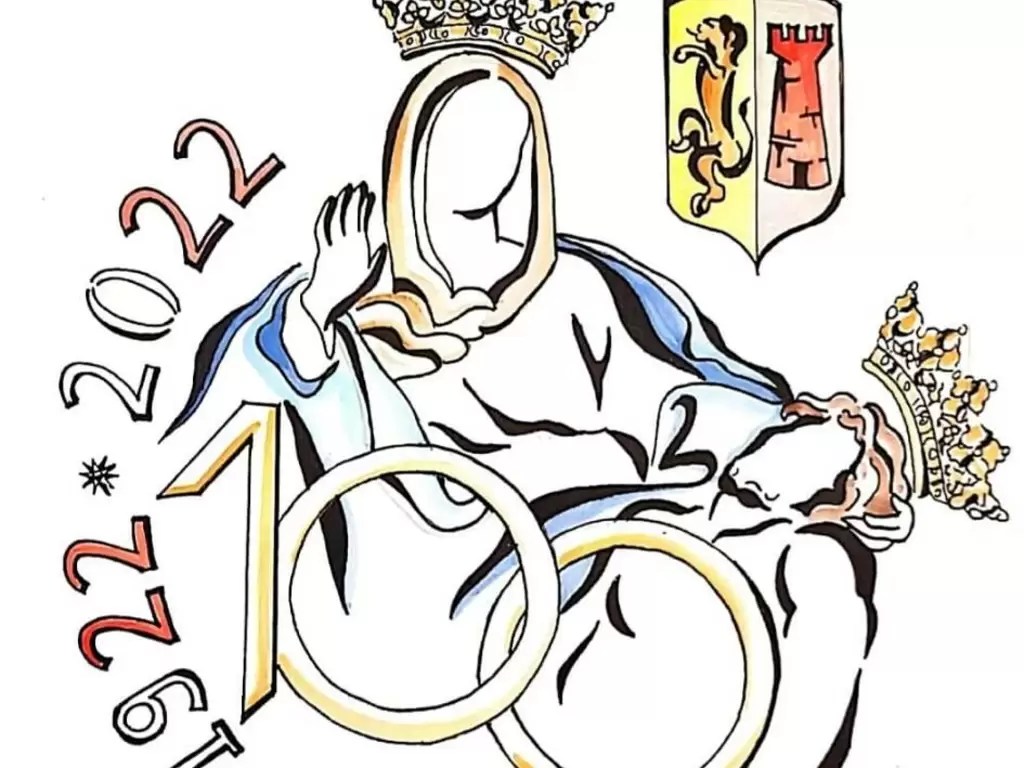
In 1837 the deadly scourge of cholera hit the population of Borgetto hard, so much so that out of 5000 inhabitants, in less than a quarter of the hot summer more than 500 people were mowed down by the terrible epidemic. In 1855 the number of Decurions went from 12 to 14; with the Kingdom of Italy to 20 Councilors. Civil redevelopment works were carried out in the town that made it more functional to stay: such as sewers, cemetery, water service, roads, bridges. This complex of works was crowned in September 1914 by the laying of the first stone of the great school building, a true temple of science and civilization, as it was called then, performed by VE Orlando with a rite marked by solemnity and decorum. Another event worthy of mention, which brought about days of spiritual joy, was the solemn Coronation of the Madonna del Romitello, which took place on August 27, 1922. In that atmosphere of fervor, Borgetto took on the appearance of a noisy and carefree town. The musical band was reconstituted, a hotel-restaurant was opened; everything worked as it should. Every civic administration that has dealt with the “res publica” of Borgetto has tried not to look bad in the eyes of public opinion, by promoting trade, local industry, in short, by increasing the well-being and tranquility of the town. Among the latest praiseworthy initiatives of great public utility, we should mention the opening of the public telephone (21/12/1951); the creation of the municipal building complex; the Post and Telecommunications building officially inaugurated on 10/9/1961 by the Hon. Bernardo Mattarella. by the Hon. Bernardo Mattarella. Many things are still planned for realization, some of which will be carried out immediately, others still await better times. It should be remembered that Borgetto was the birthplace of people worthy of mention, such as Cav. Dott. Salvatore Salamone Marino (8/12/1847 ) famous for his investigations and his rich contributions to the history of Sicilian folklore. He wrote a famous publication: the Baroness of Carini, a pathetic-sentimental story that has moved and continues to move its readers. Useful works on Borgetto are: the publication of the parchments on the origins of the town, historical notes of the Ciambre Monastery, and on the history of the Madonna del Romitello. He died in Palermo on March 17, 1916. famous for his investigations and his rich contributions to the history of Sicilian folklore. He is the author of a famous publication: the Baronessa di Carini, a pathetic-sentimental story that has moved and continues to move its readers. Useful works on Borgetto are: the publication of the parchments on the origins of the town, historical notes of the Ciambre Monastery, and on the history of the Madonna del Romitello. He died in Palermo on March 17, 1916. Another character worthy of mention is Mr. Comm. Dr. Santi Migliore. His legal expertise as a scholar and teacher not only made him a leading politician, so that he could preside over the Supreme Court of Justice in 1854, but also gained him the support and approval of souls exacerbated by village disagreements. We also remember Mr. Di Marco Notar Salvatore, a man of qualified culture and healthy balance in the many and delicate roles to which he was assigned. Born poet is Salvatore B’Arrigo whose Sicilian “Lu culera di lu 1837” deserves to be noted. Andrea Albano born in 1816, versified a lot and his poems of Archilochean inspiration became very popular. He died in 1858. Salvatore Caronda, also versified mainly on religious subjects. Among the sons of Borgetto, there is a distinguished contemporary personality, Giuseppe Pirrone, a skilled bronze engraver, sculptor and painter worthy of interest. He was given the onerous task of creating the monumental complex for the Fallen of Borgetto. Can. Dott. Baldassare Safina, not from Borgetto, deserves a place all by himself. A name dear to every Borgetan, Can. 5afina came from Mazzara del Vallo in 1904 to direct the ‘Santuario del Romitello. We owe to him the coming of the Passionist PP. to Borgetto, the Solemn Coronation of the Madonna del Romitello and having taken care of the maintenance of the road of the Sanctuary with no small sacrifices. He died on August 22, 1926 and all of Borgetto mourned him as a father and distinguished benefactor and paid him a solemn funeral. A special note must be made regarding the ecclesiastical heritage of the town.
 Mignano Family